

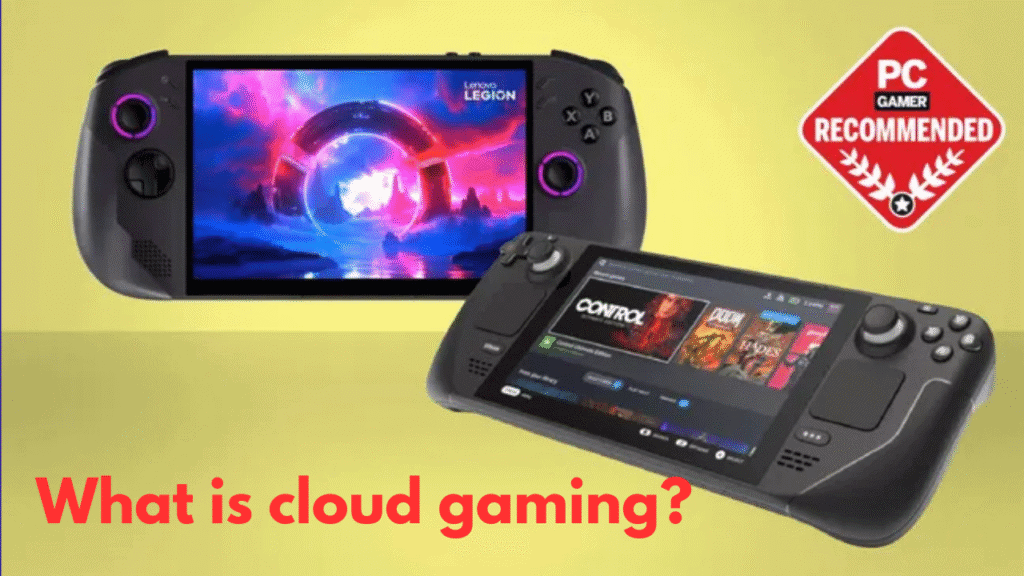
Remember when playing video games meant being stuck in front of a console or PC? If you were halfway through a mission on GoldenEye 007 or Halo and someone called you for dinner, you had two choices: pause the game and risk losing momentum, or turn it off and start again later.
Those days are fading fast. Thanks to cloud gaming, you no longer need a bulky console or expensive gaming computer to dive into your favorite worlds. All you need is a screen, a controller, and a good internet connection.
According to research firm Newzoo, more than 31 million people used cloud gaming services in 2022, spending around $2.4 billion. By 2025, that number could reach 87 million users and $8.2 billion in revenue. It’s clear: this isn’t just a passing trend it’s the future of gaming.
What Is Cloud Gaming?
Think of it like Netflix for video games. Instead of buying a console, downloading a massive game, and waiting through updates, you just stream the game online. The graphics, the processing, the heavy lifting all of it happens on powerful servers in data centers.
Your device whether it’s a laptop, tablet, smartphone, or even a smart TV simply receives the video feed and sends back your button presses. It doesn’t matter if your phone isn’t the latest model or your laptop isn’t “gaming grade.” If it can stream a video smoothly, it can probably handle cloud gaming.
Even better, cloud gaming keeps your progress synced. Start a game on your TV, pause, then pick up right where you left off on your phone during a commute.
How Does Cloud Gaming Actually Work?
Here’s the simple breakdown:
- You log into a cloud gaming service and pick a game.
- The game runs on a remote server not your device.
- The server sends the gameplay back to you as a video stream.
- Every button press you make is sent back to the server almost instantly.
For this to feel smooth, you need decent internet. Most platforms recommend at least 10–20 Mbps for HD streaming and more for 4K. Latency the tiny delay between pressing a button and seeing the action is equally important. With a stable connection, it feels as responsive as playing on local hardware.
What You Need to Start Cloud Gaming
The beauty of cloud gaming is that the setup is minimal compared to traditional systems. You’ll need:
- A solid internet connection — preferably wired or strong Wi-Fi.
- A compatible device — laptops, smartphones, tablets, or smart TVs.
- A controller or input device — Bluetooth controllers work well, or a simple keyboard and mouse.
That’s it. No more downloading 100GB game files, buying expensive consoles, or running out of storage space.
Popular Cloud Gaming Platforms
Several companies are racing to dominate this new space, each offering something slightly different.
Xbox Cloud Gaming
Included with Microsoft’s Game Pass Ultimate subscription, Xbox Cloud Gaming offers hundreds of titles across console, PC, and mobile devices. Games like Fortnite can even be played for free with just a Microsoft account.

PlayStation Plus Premium
Sony’s top-tier membership includes streaming for hundreds of PlayStation titles, from classics to modern hits. It works on PlayStation consoles and Windows PCs, though not as many device options as some rivals.
Amazon Luna
Amazon splits its service into “channels.” Prime members get access to a rotating library of free games, while paid bundles like Luna+ or Ubisoft+ add more variety. It works seamlessly with Fire TV devices, making it beginner-friendly.
GeForce NOW
NVIDIA’s approach is unique: instead of selling games, it lets you stream titles you already own on platforms like Steam or Epic Games. There’s a free tier plus paid options for faster performance and higher-quality streaming. The big benefit? Even if you stop paying, you still own your games in your library.
Why Gamers Love Cloud Gaming
The excitement isn’t just about convenience cloud gaming solves a lot of common headaches:
- No expensive gear: You don’t need a high-end console or gaming PC.
- Instant play: Skip downloads, patches, and installations.
- Flexibility: Switch between devices without losing progress.
- Future-proof: As servers get better, your experience improves automatically.
The Drawbacks to Keep in Mind
It’s not perfect yet. Cloud gaming still faces a few challenges:
- Internet dependency: If your connection lags, so will your game.
- Data usage: Streaming games can quickly eat through monthly data caps.
- Ownership concerns: Access is tied to subscriptions; stop paying, lose access.
- Availability: Some services aren’t available worldwide just yet.
Still, as infrastructure improves, these barriers are shrinking fast.
The Road Ahead
With faster internet speeds and 5G expansion, the future of cloud gaming looks bright. Industry giants like Microsoft, Sony, Amazon, and NVIDIA are investing heavily, and smaller players continue to innovate.
The idea of buying a $500 console every few years may soon feel outdated. Instead, gamers will subscribe to services offering vast libraries, instant updates, and seamless access across devices.
Final Thoughts
Cloud gaming isn’t just another tech buzzword. It’s changing how games are made, played, and shared. For casual players, it means jumping into a new title instantly without worrying about hardware. For dedicated gamers, it offers flexibility and the promise of ever-improving performance.
The bottom line: whether you’re sneaking in a quick match on your phone or settling in for a marathon session on your TV, cloud gaming is shaping the future of play and it’s only just getting started.